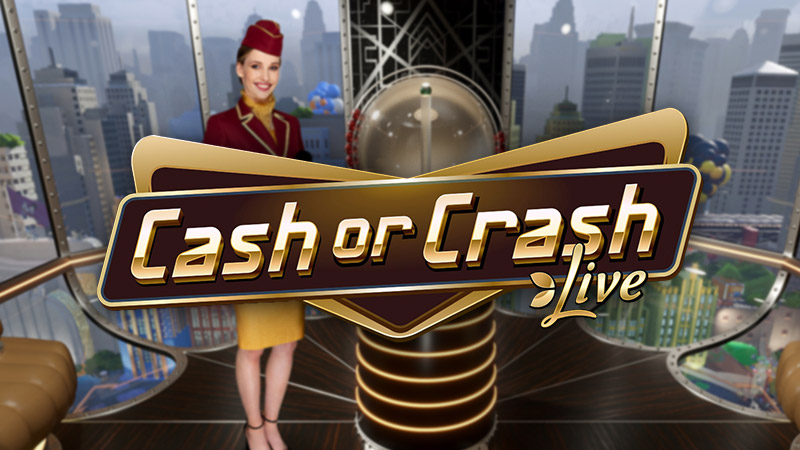
The concept of in-flight amusement has experienced a major transformation, transitioning from collective cabin screens to individual request-based platforms. Today, a novel type is developing, combining interactive gaming entertainment with the chance of concrete incentives, directly accessible from a flier’s personal device. Cash or Crash Live represents a notable instance of this fresh movement, offering a live game show adventure designed for interaction during air travel. This particular analytical assessment evaluates the operations, draw, and operational aspects of this leisure format in the specific framework of UK air space and for the UK traveling population. This experience strives to provide a unique pastime, blending the suspense of a live show with the convenience of onboard connection, generating a one-of-a-kind concept for carriers seeking to enhance their online customer experience.
The Development of In-Flight Entertainment Systems
The history of in-flight entertainment is a testament of technological advancement and changing passenger expectations. For decades, the experience was mostly passive, marked by a single film projected onto a bulkhead screen, with audio delivered via unwieldy headsets. The introduction of seatback screens represented a revolution, giving passengers a degree of control and choice, with collections of films, television series, and music. This hardware-dependent model, however, entailed significant weight and maintenance costs for airlines. The current paradigm shift moves towards ‘bring your own device’ (BYOD) systems, utilizing the passenger’s own smartphone or tablet as the primary entertainment portal. This shift reduces aircraft weight, streamlines airline logistics, and allows for more customized and updateable content. It is within this BYOD ecosystem that interactive applications like Cash or Crash Live discover their niche, providing a dynamic, participatory form of entertainment that static video libraries cannot provide, matching modern expectations for interactive digital engagement.
Transitioning from Passive Viewing to Active Participation
The shift from passive viewing to active participation is a critical evolution https://cashorcrash.uk/. Traditional entertainment options are intended for consumption, a way to pass time. Interactive applications, conversely, require engagement, decision-making, and emotional investment from the user. This active model can modify the perception of time during a flight, notably on shorter UK domestic or European routes where a full-length film may not be viable. The psychology of participation indicates that a passenger involved in a game or interactive experience is more likely to be absorbed, potentially reducing the subjective experience of flight duration. For airlines, this constitutes an opportunity to increase perceived value and passenger satisfaction without significant additional hardware investment. The success of such models, however, depends on intuitive design, reliable connectivity, and content that is captivating enough to motivate participation over more passive, traditional options.
Summary: A Novel Space in In-Flight Recreation
Cash or Crash Live represents a cutting-edge innovation in the in-flight entertainment landscape, particularly customised for the connected, interactive expectations of modern flyers. Combining the suspense of a game show with the convenience of personal device technology, it carves out a unique niche that complements rather than substitutes traditional pastimes. For UK passengers, it presents a captivating diversion that can change time awareness and bring a layer of adventure to the flight, provided it is enabled by strong onboard connectivity. Its working model, carefully separated from real-money gambling, allows for broad accessibility. While its long-range prospects will hinge on continuous innovation and close airline integration, it presently stands as a significant example of how the passenger experience in UK airspace is evolving, shifting from a purely service-oriented travel to an opportunity for curated digital participation and corporate engagement at 30,000 feet.
Possible Future Developments and Carrier Partnerships
The direction for interactive in-flight entertainment like Cash or Crash Live heads towards greater integration and individualisation. Future developments might see the game linked directly to airline loyalty systems, with multipliers converting to air miles or lounge access passes. Themed versions connected to destinations or airline brands would enhance the marketing synergy. Technologically, integration with the aircraft’s inflight system could allow for gentle notifications or smooth login via the passenger’s booking reference. As connectivity technologies like Low Earth Orbit (LEO) satellite internet become more prevalent in aviation, enabling greater bandwidth and decreased latency, the potential for even more sophisticated live multiplayer experiences grows. For UK airlines, strategic partnerships with proven entertainment providers might become a component of their digital roadmap, aimed at attracting specific passenger segments and increasing ancillary revenue opportunities through sponsored rewards or premium game features.
Exploring the Traveler Engagement System
The interaction model of Cash or Crash Live is intelligently constructed to leverage several emotional triggers. The live, real-time nature generates urgency and a fear of missing out (FOMO), urging passengers to start a session as it commences. The simple ‘cash out’ action provides a direct feeling of control, a potent psychological lever in an setting where passengers have little control over their trip. The increasing multiplier plays on anticipation and risk-reward evaluation, a cognitive process that can be deeply absorbing. Furthermore, the chance for recognition, such as a leaderboard showing the top cashed-out multipliers from a flight, brings a social competitive element. For the UK traveller, who may be commuting for business or leisure, this model offers a quick, engaging mental pause that is more interactive than reading or watching a film, likely increasing overall satisfaction with the flight experience by providing a unforgettable and fresh activity.
Demographic Appeal and Time-Passage Perception
The attraction of such games probably varies across passenger groups. Younger, digitally-native travellers may be immediately attracted to the interactive, game-show format, while others may view it with curiosity. Its appeal lies in its simplicity; the core decision is easy to understand regardless of gaming proficiency. A significant alleged benefit is the change of time-passage perception. Engaging in a series of short, tense rounds can make time feel as though it is passing more swiftly, a valuable effect on delayed flights or during the mid-flight phase of a journey. This psychological distraction can be particularly effective on the tightly packed short-haul routes prevalent in UK and European air travel, where cabin space is restricted and traditional entertainment options may feel constrained. It offers a focused activity that requires minimal physical space but substantial mental attention.
Linking with UK In-Flight Connectivity Services
The sustainability of live interactive entertainment like Cash or Crash Live is closely tied to the accessibility and quality of onboard Wi-Fi. Across UK airlines, the deployment of internet services has been steady, with many carriers on regional and intercontinental aircraft now offering a kind of web access, often known as ‘Wi-Fi above the clouds’. The service models range, including free messaging packages to paid tiers for full internet browsing. For a smooth Cash or Crash Live experience, a reliable, responsive link is preferable, though the game’s data requirements are typically minimal relative to streaming video. The integration process for the operator requires collaborating with the entertainment provider and guaranteeing the game’s data traffic is either approved or functions efficiently within the satellite or air-to-ground network’s bandwidth constraints. This system integration is essential for delivering a smooth user experience that enriches, rather than frustrates, the passenger journey.
Comprehending the Cash or Crash Live Gameplay Mechanics
Cash or Crash Live works on a simple yet tense premise, styled after a live game show. Participants take part in a live session, commonly using in-flight Wi-Fi to attach their device to the game server. The core mechanic features a virtual multiplier that grows incrementally as a visual representation, such as a rocket or balloon, advances on screen. The central decision for the player is when to ‘cash out’ and lock in the accumulated multiplier, which converts to a potential reward. The inherent risk is that the game can ‘crash’ at any random moment, returning the multiplier to zero for any players who have not cashed out. This creates a classic tension between greed and caution. The live element is crucial, as all participants in that session undergo the same multiplier curve and crash point, encouraging a sense of communal anticipation and competition, albeit remotely, with other passengers on the same flight or network.
The Function of Random Number Generators and Fairness
The reliability of a game like Cash or Crash Live is fundamentally dependent on its Random Number Generator (RNG). The moment of the ‘crash’ is established by this algorithm, which must be provably fair and transparent to preserve user trust. Providers often utilize cryptographic techniques to permit for the verification of each round’s outcome, assuring the crash point was not manipulated after the fact. For the UK audience, which is accustomed to stringent regulations around gambling and gaming via the UK Gambling Commission, the difference between a game of skill and a game of chance is paramount. Cash or Crash Live, in its standard form accessible in-flight, normally operates as a free-to-play game with non-monetary rewards or promotional credits, deliberately distancing itself from real-money gambling models. This positioning is essential for its adoption by airlines and its accessibility to a broad passenger demographic without age or regulatory restrictions.
Legal and Operational Considerations in UK Airspace
Operating any form of dynamic service within the aviation environment requires careful management of legal and functional frameworks. In the UK, the primary factor is the clear separation from real-money gambling, which is heavily controlled. Cash or Crash Live, when offered as a free promotional game with prize draws, vouchers, or air miles as rewards, operates outside gambling legislation. Airlines must verify their deployment adheres with advertising standards and does not deceive passengers about the nature of the rewards. Practically, the service must be structured for offline resilience or minimal data usage to address connectivity black spots, frequent during certain flight phases. Furthermore, user interface design must factor in the cabin environment: screen brightness that is modifiable for night flights, simple controls, and clear status indicators. These considerations are essential for a service that aims to be a seamless part of the in-flight experience rather than a cumbersome addition.

Critical Assessment of Long-Term Viability
The long-term viability of a single application like Cash or Crash Live depends on its ability to progress and maintain novelty. The primary game mechanic, while captivating, threatens becoming repetitive without alternatives, new risk scenarios, or advancing reward structures. Its success is also dependent on the broader acceptance of dependable, and ideally, free, in-flight Wi-Fi across UK fleets; a paid connectivity barrier substantially restricts the addressable audience. Furthermore, it must persistently justify its place in a passenger’s personal device ecosystem, competing not only with other in-flight options but with pre-downloaded content and offline apps. For sustained relevance, it may require to develop into a platform offering a collection of different live interactive experiences, perhaps including trivia, prediction markets on flight details, or other socially-connected games. Its survival will hinge on proving clear value to both airlines—through enhanced passenger satisfaction metrics and engagement data—and to passengers, through steady, pleasurable, and rewarding user experiences.
Contrastive Analysis with Standard In-Flight Options
When set alongside traditional in-flight activities, Cash or Crash Live fills a unique niche. It is not a direct competitor to film or television series collections, which serve a alternative need for narrative immersion and relaxation. Instead, it enhances them by providing an alternative for passengers seeking stimulation and interaction. Compared to pre-loaded puzzle or arcade games often present on seatback systems, the active, group, and high-stakes (albeit virtual stakes) nature of Cash or Crash Live delivers a distinct adrenaline response. Its value proposition for airlines is multifaceted: it can function as a low-cost content addition that updates frequently, yields operational data on passenger engagement, and acts as a potential differentiator in a competitive market. For the passenger, it broadens the menu of on-hand activities, providing a choice that can be tailored to mood and flight duration.